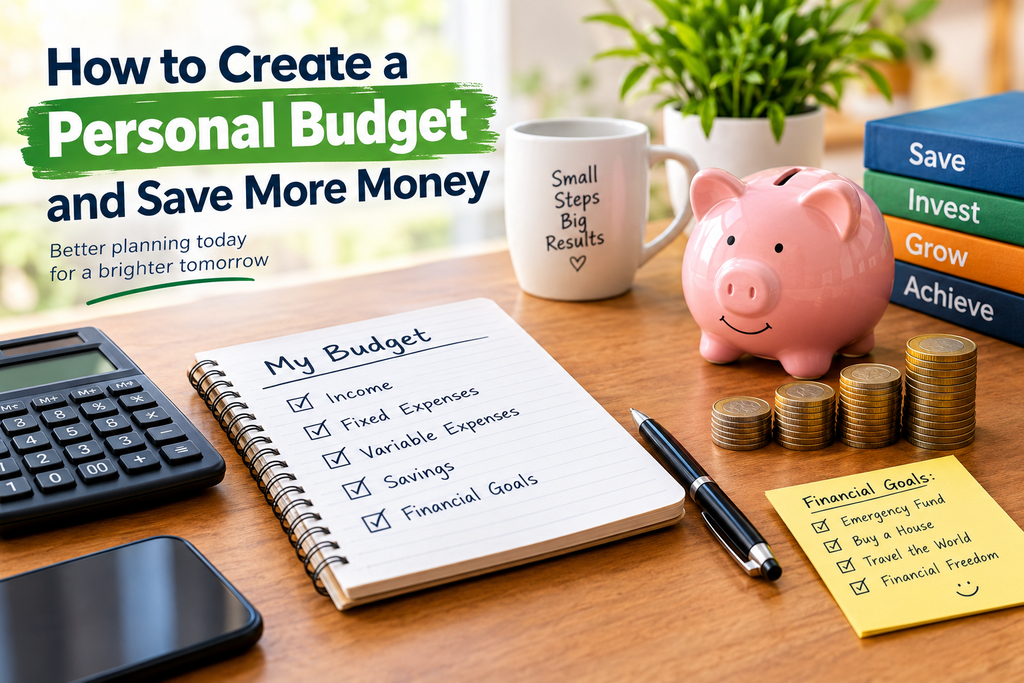
How to Create a Personal Budget and Save More Money
Managing money can sometimes feel difficult, especially when monthly expenses keep increasing. Without a clear plan, it is easy to spend more than you earn and struggle to save anything. The good news is that creating a personal budget does not have to be complicated. A simple budget can help you understand where your money goes, control unnecessary spending, and build better financial habits.
1. Know Your Monthly Income
The first step in creating a personal budget is knowing exactly how much money you receive each month. Add your salary, freelance income, business earnings, or any other regular source of income.
If your income changes from month to month, use an average based on the previous few months. Having a realistic idea of your available income will make it easier to decide how much you can spend and save.
2. Track Your Expenses
Before making a budget, spend some time tracking your expenses. Write down everything you spend money on, including rent, groceries, transportation, utility bills, subscriptions, shopping, and entertainment.
Divide your expenses into two categories: fixed expenses and variable expenses. Fixed expenses usually remain similar each month, while variable expenses can change. Tracking your spending often reveals small purchases that are taking a surprisingly large amount of your income.
3. Follow a Simple Budgeting Rule
One popular budgeting method is the 50/30/20 rule. Under this approach, around 50% of your income is used for needs, 30% for wants, and 20% for savings or debt repayment.
This is not a strict rule that everyone must follow. Your personal situation may require different percentages. The important goal is to create a plan that allows you to cover essential expenses while still putting some money aside for the future.
4. Reduce Unnecessary Spending
Once you understand your spending habits, look for expenses that can be reduced. You might discover unused subscriptions, frequent restaurant visits, impulse purchases, or expensive alternatives that could be replaced with cheaper options.
You do not need to eliminate everything you enjoy. Instead, focus on spending intentionally. For example, cooking at home a few more times each week can reduce food costs without completely changing your lifestyle.
5. Build an Emergency Fund
An emergency fund is an important part of financial planning. Unexpected expenses such as car repairs, urgent bills, or temporary loss of income can create financial stress if you have no savings.
Start with a small target if saving a large amount seems difficult. Even putting aside a small amount every month can gradually create a useful financial safety net. Over time, you can work toward having several months of essential living expenses saved.
6. Set Specific Savings Goals
Saving money becomes easier when you have a clear reason for doing it. Instead of simply saying, “I want to save more,” choose a specific goal.
Your goal could be saving for a new car, a home, education, a vacation, or retirement. Decide how much you need and when you want to reach the goal. Then divide the amount into manageable monthly savings.
Final Thoughts
Creating a personal budget is not about restricting every purchase or avoiding things you enjoy. It is about understanding your money and making better decisions with it. By tracking income and expenses, reducing unnecessary spending, building an emergency fund, and setting clear savings goals, you can gradually improve your financial situation.
The most important thing is consistency. A perfect budget is not necessary; a realistic budget that you can follow every month is much more valuable. Start with small changes today, and over time those habits can make a meaningful difference to your financial future.
